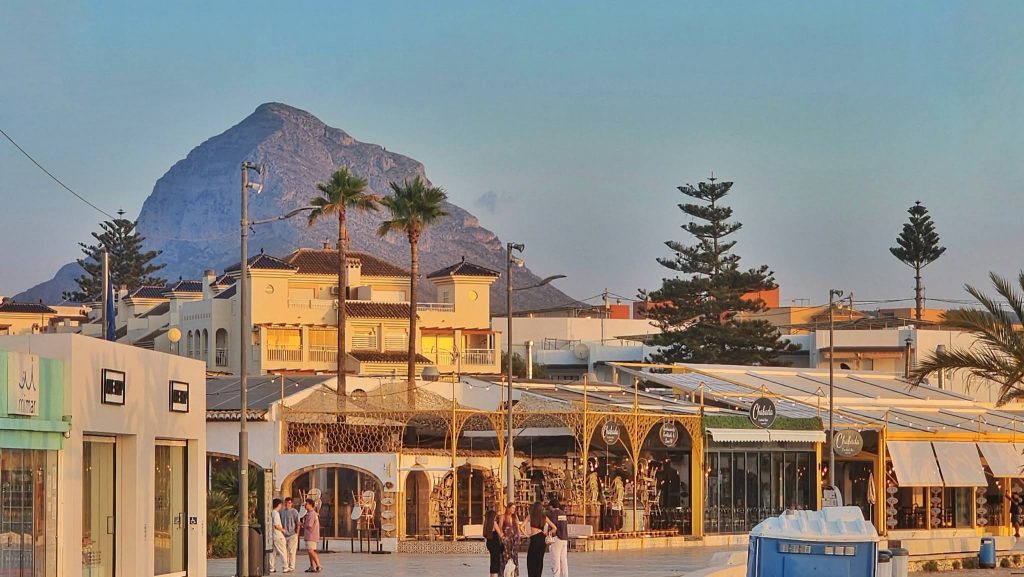
Jávea, known as Xàbia in Valencian, is a beautiful coastal town with something for everyone. Nestled between the dramatic rocky headlands of Cap de Sant Antoni and Cap de la Nau, both crowned by their own lighthouses, Jávea combines spectacular scenery with a relaxed Mediterranean lifestyle. Over the years, it has become home to people from many different nationalities, creating a welcoming, cosmopolitan atmosphere while retaining its traditional Spanish charm.
A few kilometres inland lies Jávea’s fascinating historic centre, where narrow streets, traditional townhouses and centuries of history await discovery. At its heart stands the impressive Church of Sant Bartomeu, an iconic landmark that dominates the old town.
Wander through the surrounding streets, and you’ll find beautiful examples of traditional architecture, with wrought-iron balconies, imposing wooden doors and distinctive local stonework. With its atmospheric streets, historic buildings and bustling plazas, Jávea’s old town offers a wonderful contrast to the beaches and coastline just a short distance away.
Old Town:
Explore the charming streets of Jávea’s historic centre, home to the Town Hall, museums, art galleries and the impressive fortified Church of Sant Bartomeu. With traditional architecture, lively plazas, cafés, bars and a great choice of restaurants, the Old Town is well worth discovering.
Viewpoints:
Jávea is famous for its spectacular coastline and scenic viewpoints. The headlands of Cap de Sant Antoni and Cap de la Nau offer breathtaking Mediterranean views, lighthouses and beautiful coastal walking routes.
Marina & Fishing Port:
Take a stroll around Jávea’s picturesque marina and traditional fishing port, where you can watch the fishing boats come and go or relax at one of the nearby bars and restaurants.
Beaches & Coves:
From the popular sandy Playa del Arenal to the pebbled Playa del Benissero and beautiful Cala Blanca, Jávea offers a wonderful selection of beaches and secluded coves, each with its own character.
Thursday Market:
Jávea’s weekly market takes place every Thursday morning around the Plaza de la Constitución and surrounding streets. Browse stalls selling fresh fruit and vegetables, local produce, clothing, accessories and much more.
Jávea/Xàbia has a particularly rich calendar of traditional fiestas. The official Xàbia tourism guide highlights four major celebrations—Jesús Nazareno, Fogueres de Sant Joan, Moros y Cristianos and Virgen del Loreto—alongside several smaller traditional fiestas.
Main Fiestas in Jávea / Xàbia
- January – Three Kings / Reyes Magos – The traditional arrival of the Three Kings on 5 January, with parades and celebrations for children.
- February/March – Carnaval – Colourful fancy-dress celebrations, music and entertainment, usually held in Jávea’s historic centre.
- March/April – Semana Santa (Holy Week) – Traditional Easter religious services, processions and celebrations.
- Late April–3 May – Fiestas de Jesús Nazareno – One of Jávea’s most important traditional fiestas. Celebrations include processions, flower crosses, music, fireworks, a mascletà and other festivities in the Old Town.
- June – Fogueres de Sant Joan (San Juan) – One of Jávea’s biggest fiestas, welcoming the arrival of summer with around two weeks of music, parades, parties, bonfires and fireworks. A highlight is the famous Nit dels Focs, recognised as a Fiesta of Tourist Interest.
- 23 June – Noche de San Juan – The magical night of San Juan, traditionally celebrated with fire, festivities and celebrations around the town.
- July – Virgen del Carmen – Celebrating the patron saint of sailors and fishermen, including a traditional maritime procession from Jávea Port.
- July – Moros y Cristianos (Moors & Christians) – One of the most colourful events of the year, centred around Duanes de la Mar/Jávea Port. Expect spectacular costumes, music, mock battles, a Moorish landing and impressive gala parades.
- August – Virgen de los Ángeles – Traditional celebrations associated with the area around La Plana and the sanctuary of the Virgen de los Ángeles.
- August – Fiestas del Portitxol – A smaller but much-loved traditional fiesta in the Portitxol area, celebrating local customs, music and community life.
- Late August/Early September – Fiestas de la Virgen de Loreto – The major fiesta of Jávea Port and one of the highlights of the summer. Celebrations traditionally include music, processions, fireworks and the famous Bous a la Mar.
- 9 October – Día de la Comunitat Valenciana – Valencian Community Day, marked by cultural and civic events.
- 13 December – Santa Llúcia – One of Jávea’s oldest traditional celebrations, featuring a pilgrimage to the hilltop Ermita de Santa Llúcia, followed by Mass and traditional refreshments.